

There are lots of ageist stereotypes in books, and frankly, it’s getting a little…old.
And it’s really too bad, because many heavy readers of fiction are over 50, and they deserve better representation.
I believe that ageism is a huge factor in the publishing industry in general, and I suspect that many agents and acquiring editors (or the bosses and marketing teams the acquiring editors work with) are biased against stories about older protagonists. Even after the absolutely staggering success of books like The Thursday Murder Club and others in the series by Richard Osman, and The Correspondent by Virginia Evans, I’m not seeing a slew of agent requests for fiction featuring senior citizen characters. It’s as if a book that centers older characters is always viewed as an outlier.
Later in life romance is still rare, but there are some great books out there. For middle-aged romance, I especially recommend Role Playing by Cathy Yardley (she’s 48, he’s 50), and for older romance, I definitely recommend Elsie’s New Season by Julie Berman (she’s 77, he’s 75.)

I first thought about the issue of writing old characters over a decade ago, when I read a wonderful and very honest essay by the writer Ceridwen Dovey in The New Yorker: “What Old Age Is Really Like.” In the essay, Dovey describes her attempts to write about old people:
My protagonist became Generic Old Man: crabby, computer illiterate, grieving for his dementia-addled wife. Not satisfied to leave him to his misery, I forced on him a new love interest, Eccentric Old Woman: radical, full of energy… After reading the first draft, an editor I respect said to me, ‘But what else are they, other than old?’
In the essay, she goes on to ponder:
Why did I so blithely assume that I had the right to imagine my way into old age—and that I could do it well—when I would approach with extreme caution the task of imagining my way into the interior world of a character of a different gender, race, or class? Had I assumed that anybody elderly who might happen to read the book would simply be grateful that someone much younger was interested in his or her experience, and forgive my stereotyping?
This essay is a great read and still very relevant, and I recommend it!
Isabel Wilkerson, in her excellent book Caste, also wrote a passage about ageism that really stuck with me (and I’ve quoted it in this blog before!)
Even the most privileged of humans in the West world will join a tragically disfavored caste if they live long enough. They will belong to the last caste of the human cycle, that of old age, people who are among the most demeaned of all citizens in the Western world.
I’m going to share my own opinions about writing older characters, responding to a lot of the clichés I see in novels. If you read any of these things and think, “Hey, I’ve done that in my writing,” well, guess what? I’ve done more than one of these things! And a lot of times, I think it’s okay for a character to align to a certain stereotype…as long as that isn’t ALL the character is.

Remember that not all older people are crabby.
If an older character is a perpetual grouch, it might be good to know whether they’ve always been grouchy, or whether circumstances in their life made them more cranky. A grouchy person still has an array of individual likes, dislikes, habits, and quirks.

Cool it with the “old people don’t understand technology” humor.
If you write a fifty-year-old character who’s never heard of TikTok, a sixty-year-old who has no idea how to take a photo with a phone, or a seventy-year-old who’s baffled by Google Maps, some of your readers will roll their eyes. While some older people may be confused by these things, most of them aren’t. Besides, as a humor bit, it’s just overdone.
Honestly, you know what I would find more realistic? A younger character saying, “Grandma, we’ve both been staring at our phones for two hours. You’re liking videos of AI puppies, and I just realized I’ve been arguing with a bot. Let’s take a walk.” People in all generations have issues with phone addiction!
Recognize that some ageism is ableism.
An older person is much more likely to have health issues, vision or hearing impairment, and/or mobility issues, although this varies widely.
It would be mean to make fun of someone on crutches for moving slowly. It’s equally mean to make fun of an older person for moving slowly; they might have arthritis, mobility issues, or balance issues. If you wouldn’t mock a young person for having low vision or a hearing impairment, is it really classy to mock an older person for needing reading glasses, or being hard of hearing?
Of course, some older characters may make jokes about their own limitations, because humor is a coping mechanism.

Remember that not every old person calls everyone “dear.”
In real life, I rarely meet someone who calls everyone “dear.” In books, it seems like the majority of the old characters do. To me, it’s dated and a little silly. It’s as if every fictional Gen Z character in books said, “Six-seven!”
If you want to write authentic dialogue for an older character, you might want to pay close attention to the phrases older people in your life use when they speak. You can also watch interviews with older people on YouTube.
Don’t act like it’s gross or inherently hilarious if older people are sexual.
Of course, there can be a sense of fun and rebellion when an older character enjoys sex or thinks sexy thoughts, because it goes against societal expectations.
It’s been a long time since I’ve watched it in reruns, but I think the old sitcom The Golden Girls did a good job of finding the humor in mature sexuality, but also treating it with respect. As in other sitcoms, there were jokes about aspects of the girls’ love lives; however, their love lives weren’t a joke.
Avoid equating looking “younger than one’s age” with being a good, fun, or worthwhile person.
I see this all the time. The fun great-aunt? The wise mentor dude? You can tell they’re great, because they look younger than their age. Don’t worry, reader—they’re not like those other old people!
I think writers have the best of intentions here. In real life, older people do like being told they look young, because as a society, we equate youth not only with attractiveness, but also intrinsic worth (more on this later).
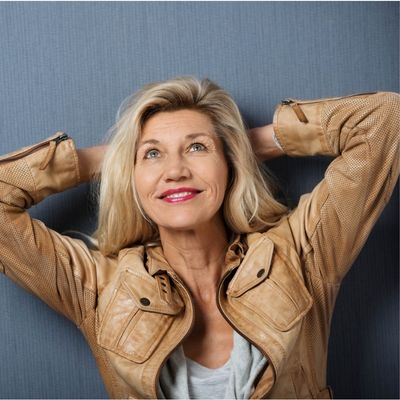
But this “she was amazing, and she didn’t look old” thing is very overdone in fiction, and it sends the message that it’s bad to look old.
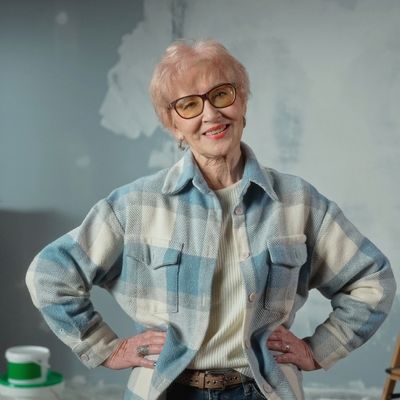
Remember that most moms and grandmas are more than just moms and grandmas.
“Nice mom” or “nice grandma” characters often seem exactly the same from novel to novel. They worry about the protagonist, and they dispense unconditional love and wise advice. They want their child to marry and procreate, and they’re amazing cooks or bakers.
These characters might meddle a bit, but who can blame them? It’s not like they have anything interesting going on in their own lives.
Even if a mom or grandma character doesn’t have a lot of time on the page, just giving her some hint of other interests can make her feel more like a real woman and less like a stock character. You could make her Kansas City Chiefs fan, give her a home improvement project, make her a book club leader or a conspiracy theorist…the possibilities are endless, really.
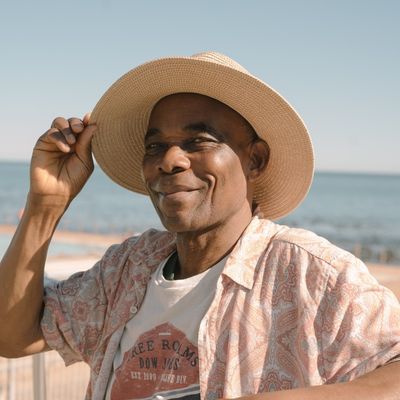
Keep in mind that “older” doesn’t always mean “more settled” or “more stable.”
I’m going to tell an embarrassing personal story. I’ve always loved the cello, and when I was thirty, I thought that after I turned fifty, I would take cello lessons. After all, I figured, life would calm down by then.
Now, I don’t think that’s going to happen. My life has gotten much busier. Back then, I had a regular job at an office; today, I’m an author, I run a freelance book editing business with my husband, and I write a blog and maintain social media accounts. I am actually living the exact life I dreamed of when I was thirty, but I wouldn’t say things have calmed down.
Older people frequently deal with big changes in their lives. They may take care of aging parents or grandchildren. If they’re lucky, they may do some traveling—maybe for the first time. They may lose a loved one. They may downsize, moving out of homes they’ve lived in for many years. They may make new friends in a senior living community. They may pursue a passion that was on the back burner.
In any case, whether for fun reasons or not-so-fun ones, it’s very likely that an older character won’t feel particularly settled or stable.
When you’re young, you have this idea that eventually, you’ll have everything figured out, but I’m not sure anyone feels like they have everything figured out all the time.
Challenge the societal belief that “old” means “uncool,” “boring,” or “irrelevant.”
This is important not only for writing, but also for life. The idea that old people are irrelevant is depressing for every generation, because who would look forward to that? This belief benefits no one, except companies that sell “anti-aging” products, maybe.
Old people and young people are equally likely to be interesting. One study even found that old people engage in a wider variety of activities over the course of a given week than younger people do. This makes sense, because younger generations are more likely to be going to school or working.
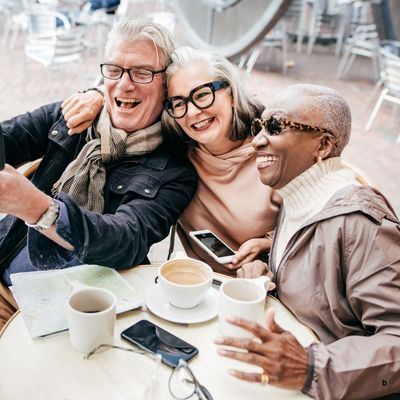
Something isn’t inherently better because it’s embraced by young people, or inherently worse because it’s associated with old people. Youth culture and old age culture are equally valid.
More Thoughts About Writing Old Characters!
I am hoping some of my readers will chime in!
•Multiple studies have shown that old people tend to feel and think of themselves as considerably younger than their biological age.
•An old person is much more likely to have experienced a significant loss, or multiple losses.
•An old person has usually seen and experienced a lot, which may influence how they react to new people, changes, and world events. They may be more likely to connect present-day events to other things they’ve seen and experienced in the past.
•Understanding a little bit of a character’s history can help you create a more well-rounded character, and I think this is especially true when you’re writing an old character.
•In the United States, an old person is somewhat more likely to be politically conservative, but there’s a wide spectrum of political beliefs in older generations. Also in the U.S., old people are much more likely than young people to actually vote.
•An old person is at least as likely as a young person to have best friends, hobbies, passions, and interests.
•An old person may be outgoing, or shy and reserved.
•An old person may be financially comfortable, or struggling to make ends meet.
•An old person may be wise, or they may be petty and ridiculous.
•An old person may be refined and polite, or crass and vulgar.
•An old person may take a lot of care with their appearance and be very into clothes, or they may have no interest in those things.
•”Old” is not a personality trait. An older character can be any kind of person.


What are your thoughts about writing older characters?
Do you have examples of positive representation of older characters, in books, movies, or TV? Do you write about older characters? Let us know your thoughts in the comments!
Thanks so much for reading, and happy writing!


I wrote a novel, the last one in a trilogy, about older characters finding love again. My editor, who had recently lost her husband, was touched by how carefully I handled the grief of the characters who had both lost spouses. They were inspired by my dad and stepmom but I gave them different traits to keep them from being caricatures.
I also write a weekly serial based on my day job where patients in a nursing home have magical powers tied to their comorbidities. It started as a way to cheer up my coworkers during a rough year and I’m now on season 3. I’m very meticulous about studying the resident of the week’s disease and making the power match well. Honestly, writing the residents has been the most fun I’ve ever had writing!
Katie, that’s fantastic how you use your job experiences to portray “old” people. You see them as not just a patient or someone to deal with, but you understand them and give them super powers.
Well, this spring I published a novel starring an older woman. And it’s been well-received: 4.7 out of 5 stars (1,657 ratings/reviews) It’s called Come Calling, a Sam & Mr. Nosy K-9 Cozy Mystery. And I do the unconscionable, I start out with death–the death of a horse. And Sam is old-fashioned, but Sam is capable.
1 – The Gift
SAMANTHA CASSIDY watched the vet’s mobile clinic disappear down the drive. It took effort, but she gave a wave. Heard the tractor. Turned away as it came in sight over the rise, her eye catching at the horse pasture where morning mist still hung low like a fluffy white blanket on the spring grass.
Behind her, the clink of metal was hurtful to her ears as Colt set the tractor’s feet down. The engine revved as he started moving dirt with the backhoe attachment, him filling in her Benny’s grave. She was thankful she wasn’t the one having to do it—she was—but every scrape and grind was like a turn of a knife inside her. First losing Clinton two years past, now Benny.
She dropped her face to watch the ground. Kicked a stone. What was left to her? Raised her eyes and caught the sunshine coming through the trees, swirls of dust motes dancing as the tree trunks split that light into beaming rays. She heard a crow caw. Then another.
The tractor’s engine faded. Job done already? It had taken Colt only minutes—only that long for him to bury the last love, aside from her kids, remaining in her life.
So it is possible to do.
D. L. Keur, author
Well said, given we buried our old horse two years ago.
I’m so sorry. It’s really hard to lose a stable buddy. It is.
Well said to you, too, Bryn. Helen Mirren comes to mind in her many roles, one of which is the character in Reds.
I loved this post Bryn! My suggestion for authors bringing older people into their stories would be to spend time with some of them, visit nursing homes, think about their own older relatives and relationships with their own friends’ parents and grandparents. Keep it real…which can be funny, sad, whatever fits for your character. As a soon-to-be 75-year-old, I find it disturbing to read about a character (whether it’s a 60 or 70-year-old as an example) who can’t walk up a flight of stairs or can’t keep up with technology, etc, simply based on their age. Those characters would certainly need more context and age would most likely not be the culprit. Thanks for the post.
I really enjoyed this article! I write cozy mysteries and my characters keep getting older! But I do see a LOT of these stereotypes in my genre, and I think it’s worth putting more thought into how we portray older characters!
I have older characters in my Monarch Moon series. They are support characters, but comments made by readers of the first book, Monarch Moon, called them “fun ” and “delightful.”
One of my couples argue back and forth to cover up their attraction to each other. The romance grows over the spread of the next three books. The series focuses on a younger couple but there are mixed ages throughout.
My husband and I belong to the older population. I am seven years older than he, but I’m the techy one in the family. I set up our new smart tv last year. I fix his phone and computer problems, and tv issues after he screws it up.
In spite of some health issues over the years that have slowed me down physically, I still feel young mentally. I dress in whatever fashions appeal to me regardless of the age they’re targeted toward. I don’t feel like I have to fit in a box.
Even though it pains me to do it, I will confess that in April, i will be 89 years old.
So, if anyone has questions about being older, I’m open.
Good for you, Bonnie! Your age isn’t always a number.
So, I’m (gulp) 69, soon to be (whispers) 70. I can attest that “old” is not a number. I will jog to my mailbox because I don’t want to take the time to stroll there. If I’m not walking in the evening with my husband–he’s a year younger than me and slow–I’ll do the route by alternating running and walking. A few months ago, I built a landing and stairs for our back door. So, don’t think all seniors are not capable.
When our kids were young, we were the first house in the neighborhood with a computer, so I have plenty of experience with those. Although, I will hand my phone to my husband to fix when I have problems with it. Of course, there are people my age who have health issues that affect what they can do and how they act. Just as at any age, there are all kinds of people.