

Do you ever set a goal of reading more, or reading a certain number of books a year? Personally, while I don’t have a set number of books in mind, I’ve been trying to spend less time reading random stuff on social media and so on, and more time reading books. And we’ve been in a deep freeze lately, making it a nice time to curl up and read…but then again, I guess all weather is good reading weather!
I’ve always felt like reading books is good for my brain and my mental health…but to motivate myself, I decided to look into it a little more.
So if you’d like to know about many reasons why reading books is important, keep reading!
But first, you may be wondering…
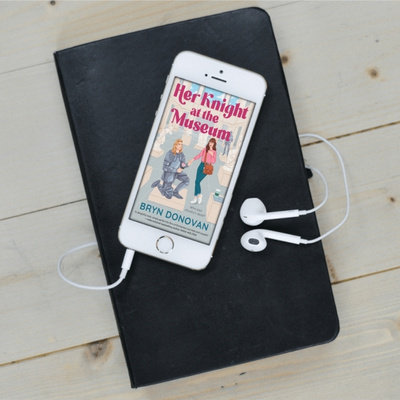
Do audiobooks count as reading?
About every other week, people on social media argue about this. Here’s what I could find!
There have been several attempts to figure out if readers have better comprehension with audiobooks or print books, but this is a difficult issue to research. It’s not surprising that a couple of studies found that audiobooks were better for comprehension, while others found that print was better. I haven’t found a study that showed a big difference in reading comprehension either way.
Discover magazine published an article called “Audiobooks or Reading? To Our Brains, It Doesn’t Matter.” It covers how a study published in the Journal of Neuroscience found that the same parts of the brain were activated whether a person was reading a print book or listening to an audiobook. This surprised the leader of the study.
Learning to read is an important part of education; however, I was unable to find any convincing evidence that listening to audiobooks is inferior to reading print books among literate adults. I suspect the benefits of reading apply to books in any format.
Okay, let’s get to the reasons why reading books is important!
1. Reading Lowers Stress.
At the University of Sussex, researchers studied various means for reducing stress. Reading a book reduced stress, measured by heart rate and muscle tension, by 68%—more than going on a walk, listening to music, or anything else they studied.
It’s interesting to compare this to the effects of social media on stress. Many of us turn to mindless scrolling when we are bored or anxious, but multiple studies have shown that social media use increases stress.

2. Reading books increases your attention span.
In the past few years, I’ve heard more people complain that they are having a hard time focusing. Some writers are even finding themselves unable to write.
This may be because social media apps and online platforms are designed to decrease attention span. They want users to scan quickly and keep swiping to see more ads. They also want to keep people on their phones constantly—and it’s working. The average American checks their phone 205 times a day and spends over 4 hours a day on their phones.
One of the benefits of reading 15 minutes a day or more is that it builds up your brain’s ability to focus and sustain attention.
3. Reading fiction increases empathy.
Multiple studies have shown that after reading fiction, people show more understanding toward others. This makes sense, because when we read, we immerse ourselves deeply in characters other than ourselves and perspectives other than our own.
4. Reading books increases critical thinking and problem-solving skills.
Admittedly, the study here was done on kids, but I don’t know why it wouldn’t be the same for adults. Reading is like weight lifting for your brain. It builds new neural networks and makes you better at thinking.
5. Reading staves off age-related cognitive decline.
A fourteen-year-long study, published in Cambridge University Press, found that adults aged 64 and up who read books once or more a week were less likely to have cognitive decline. Other research studies showed the same results.
6. Reading books helps alleviate depression.
A 2022 study showed that reading novels—as well as recalling novel reading and talking about books with others—increased people’s sense of well-being and lowered their sense of “global distress,” or feelings of doom about the world and the future. Another study suggested that reading books improves self-confidence.
Some mental health professionals hypothesize that reading about characters triumphing over obstacles can make their patients feel more hopeful about overcoming their own difficulties.
7. Reading increases your knowledge and your vocabulary.
I know this is obvious, but it’s still one of the reasons why reading books is important. I love reading nonfiction books to learn more about the world, and often a novel also teaches me more about a subject I didn’t know a lot about.
We can sometimes increase our knowledge with online reading as well, but it’s important to remember how much misinformation we encounter. A huge-scale analysis of Twitter by three MIT researchers revealed that misinformation and false news are 10 to 20 times more likely to be shared than factual information. Also, the amount of misinformation online has increased exponentially due to AI.
Nonfiction books are often written by experts, edited by professionals, and fact-checked, so I trust them more.
And this last benefit of reading might be the most striking one:
8. Reading books helps you live longer!
According to a long-term study by the Yale School of Public Health, carefully controlled for other health and risk factors, people who read 3.5 hours or more a week live an average of 23 months longer than those who don’t. Book reading (rather than newspaper and magazine reading) was the most beneficial.
Have you experienced any benefits of reading daily or weekly? Are you building up a strong reading habit again? Are you one of those people who reads 50 or 100 books a year? I’d love to hear about it in the comments! Thanks so much for stopping by, and have a great week!
Very interesting! I love this post and will read more because of it!
🙂 Thank you, Jill!
I dedicated one her per day for reading (3-4 pm) and if I go longer, that’s wonderful. I’m a slow reader, despite my French literature degree, so I average only one book per month. As a writer, I think it’s essential to keep abreast of what’s highly touted.
Hi Naomi! An hour a day of reading…that is wonderful. I have some days when I don’t read, and I think I’d be happier if I always did. 🙂
I’ve followed you for a long time and appreciate your love for books.
💙 Thank you Alarie! And HI! I hope everything’s going well for you!
At an early age, our dad would take us to Barnes and Noble on weekends. I’d spend a lot of time looking at the tech magazines, the model railroading and model building, special effects (Cinefex was big one, and my dad worked with a colleague who sold light sheets — plastic that emitted light — to effects houses) and other stuff. Then I started looking at business and biographies.
When it became “uncool” to play with toys (I stopped around Jr. High, later than most) I started putting lists of books on the Christmas lists and Birthday gift request lists I gave my parents. And I kept at it until I could by my own books. I have a sizeable library (though probably pretty small compared to people with degrees in the arts and humanities) both on Kindle and in physical form.
I was big on reading business, tech political biographies. I was also a big fan of the space. After reading and viewing Sally Ride’s book To Space and Back I started buying up space books: Gene Krantz’s Failure is not an option, Deke Slayton’s Deke!, Chris Kraft’s Mission Control, Gunter Wendt’s Unbroken Chain, and the book Secrets of Apollo. I also got into the Cuban Missile Crisis.
On the Business side books about Disney and Imagineering were my thing, along with all the big tech companies, especially AT&T and aerospace companies like Lockheed Martin’s Skunk Works (Ben Rich’s book). I also learned programming from a book on my own, a dummie’s-like book called “Adventures in C”, and the making Windows programs in Borland C++ Builder for use on our family’s new Windows 3.1 PC.
During summers my mom would bring us to the local library and the Imagineering books and the special effects, magic and haunted house books were near each other.
Reading fiction was once exclusively something I did in school for book reports or classwork. I only started reading fiction for leisure when I started writing my own creative work that’s been sitting on the shelf for quite sometime.
With a female lead in my story (which I did against advice — I just found myself moved by this character in my mind), I started trying to learn how women were portrayed in other books. James Patterson’s Masterclass talked a lot about writing for the suspense/thriller market where female readers make up a large portion of purchases (I thought he said it was > 60%). And yes, as a geeky guy with limited social experience I did start reading romance books and those around that topic and enjoyed the three or four titles I’ve read thus far.
I’ve gone from voracious reading to binge watching YouTube since Grad school though. I do read a lot of press and blogs and email newsletters. I guess the good thing is that I have pretty much broken my attraction to TV, with the exception of Little House on the Prairie which I watch with my wife (she introduced me to all the books too and I got her a more recent anthology as a Christmas gift one year).
It’s still January, so perhaps becoming a reader and a writer should be at the top of my resolutions once again. Thanks for the motivation!
Chris, hi! I hope your New Year is off to a good start. I love hearing about your reading journey! You get interested in such a wide range of topics. It’s true that most people advise against men writing female leads, but then again, I’ve loved some books written by men with female leads!
I enjoyed your input! Thank you!
I sleep better after reading before bed–unless it was a thriller.
Food for thought: Anyone arguing about audiobooks not being real reading might want to consider how ableist, discriminatory, and insensitive that claim is toward someone who can’t read in a traditional sense. My late FIL had Parkinson’s, and in his last years, he relied on audiobooks.
ps. the other day, astrolabe was Merriam-Webster’s word of the day. https://www.merriam-webster.com/word-of-the-day/astrolabe-2026-01-23
Excellent point about audiobooks and people with disabilities. My husband is dyslexic, so reading text is anything but relaxing for him. Thanks to audiobooks, he has become an enthusiastic reader.
YES, absolutely! Thank you for bringing that up. I should’ve said that. It’s so gross to suggest that people with low vision or no vision aren’t really reading.
I have come to rely more and more on audiobooks because between book editing, writing, and content creation, I get serious eye strain.
Ha! Thank you for showing me that about Merriam-Webster! 😀
Very timely post, Bryn. I prefer reading to audio. My comprehension is far greater when reading vs. listening. When I’m listening to a story, I tend to multitask (load the dishwasher, fold laundry, etc.) and I miss things said on the recording. If I listen while sitting, as if reading a book, I don’t know what to do with my eyes because they wander to the window, the trees, birds, traffic and distract me from the audio. If I close my eyes, well . . . zzzzzzzz. One thing that does work for me is if I read along with the audio. I do enjoy that for fiction because it adds a dimension to the experience of the story.
Hi Paula! I can concentrate very well on audiobooks while doing some things, but like you, I can’t do it while housecleaning or doing nothing! I usually do a puzzle or some needlework. 🙂 You reminded me that I should try reading with the audiobook. Some people call it “immersive reading,” and I’m sure it does immerse one in the story!
Hi, Bryn. I set a reading challenge for myself every year through Goodreads. Last year I reached my goal of 50 (mostly fiction) books consisting of a mix of genres.
I read both print books and my Kindle. Audiobooks are not my favorite. I can’t seem to concentrate on them as well as an actual book.
My Kindle is loaded up, but I have a nice collection of print books as well. There is a book setting near any place I might sit down for a minute. I always have one going on my Kindle that I read in bed for a few minutes every night. I also use my phone and tablet with the Kindle app. Do I have a problem getting the stories mixed up? No. It’s no different than watching several series on TV.
My goal for this year is slightly lower at 35. I’m planning on reading more classics this year and some large re-reads like Shogun and Lonesome Dove.
Reading good books has been important to me since I was a child. My older sister taught me to love them. I will always appreciate that she planted that seed in me at an early age.
I’m not doing much reading this month. My writing group sets a challenge of writing 50,000 words in January every year. I’m behind, but I still have three days, and I love where my rough draft of my fourth-in-a-series novel is going. Wish me luck.
Bonnie, hi! Well, I am impressed. Reading 50 books in one year is on my life goals yet, but I have yet to do it. I think 35 is still a great number!
How cool that your writing group does a NaNoWriMo-style challenge in January! I always thought that would be the perfect month for it, and it sounds like you got a lot done in January! Bravo!
Great piece, Bryn. Thanks. You’ve reminded me I’m not reading enough! I used to average about a book a month, anything from fantasy to thrillers to mysteries, to non-fiction stuff like Breath, or Why We Sleep—fascinating stuff. But as soon as I sit down to write seriously, I stop going into other people’s worlds and stay in my own. I should be coming up for air soon, so I’ll make sure I have a pile ready to dive into.
Audio books have never appealed to me, but I know lots of people who love them so it’s great to see authors embracing those, too. I read some books on Kindle on my Mac but it’s not the same as relaxing on the sofa with a cup of coffee, a croissant and a book. And it’s certainly not as much fun falling asleep at my desk as it is sitting in the sun with a book in my lap. So, for me, it’ll always be books.
Hi, Kate! Honestly, I wrote the post partly because I’m trying to read more for pleasure! As a book editor, I do read a book every week, and I almost always enjoy them, but I am in work mode!
I do get what you’re saying…there really is something about a physical book that is so cozy and comforting. The funny thing is, if I love an audiobook, I wind up buying the paperback for my shelf, anyway…so unless I got the audiobook from the library, the author gets two sales!